
What to Look for When Buying a Tactical Backpack
Buying a tactical backpack comes down to matching the pack's capacity, fabric strength, stitching, hardware, modular layout, and harness support to the weight you actually carry. A bag built for a three-day field trip will feel bulky and awkward on a daily commute, and a compact sling bag will strain your shoulder if you overload it with heavy tools or spare ammunition. Before you look at colors or extra pockets, measure the gear you plan to pack and weigh it on a scale.
Start with six practical checks that separate a dependable pack from one that fails under load:
- Capacity matched to trip length, measured in liters so your gear fits without bursting the zippers
- High-denier nylon or polyester fabric with a water-resistant backing to resist abrasion and light rain
- Bar-tacked stitching at the shoulder strap anchors, grab handle, and webbing stress points
- Heavy-duty, self-healing coil zippers and thick polymer buckles that operate cleanly with gloved hands
- Standardized PALS webbing rows spaced for secure pouch attachment without sagging
- A padded harness with a sternum strap and load-bearing back panel that keeps weight close to your spine
We see buyers run into trouble most often when they pick a pack based on looks instead of load weight. A 45-liter pack loaded with 12 pounds of daily items shifts around every time you step off a curb, while a 10-liter sling packed to the brim with wrenches and a full water bottle pulls on one trap muscle all afternoon. Define your primary job first, then select the smallest pack that holds that loadout with room for one extra layer.
Capacity, Size, and Loadout Purpose
Pack volume is measured in liters, and choosing the right range keeps your center of gravity stable. Tactical packs fall into three working tiers: compact sling bags under 15 liters, mid-size 24-hour everyday carry (EDC) packs between 20 and 30 liters, and large field backpacks from 35 to 55 liters. Each tier handles a distinct weight limit and time window.
A compact sling bag, usually 8 to 14 liters, fits daily essentials like a trauma kit, compact flashlight, multitool, notebook, and wallet. Because all the weight rides on a single diagonal strap across your chest and back, you can swing the bag forward to grab a tool without taking it off. Keep total load weight under 10 pounds in a sling so your neck and shoulder stay comfortable through an eight-hour shift.
Mid-size EDC packs in the 20-to-30-liter range cover a full workday, range session, or overnight trip. Two shoulder straps distribute 15 to 25 pounds evenly across your upper torso. Look for a dedicated padded sleeve for a 15-inch laptop or hydration bladder, a main clamshell compartment that opens flat for packing, and a front admin panel for pens, batteries, and spare magazines.
Large field backpacks between 35 and 55 liters carry multi-day clothing, sleep systems, shelter tarps, food, and extra water. At 25 to 45 pounds, shoulder straps alone will fatigue your upper back within two miles. You need an internal frame sheet or aluminum stay paired with a padded waist belt that transfers 60 to 70 percent of the pack weight onto your hips.
MOLLE Webbing and Modular Organization
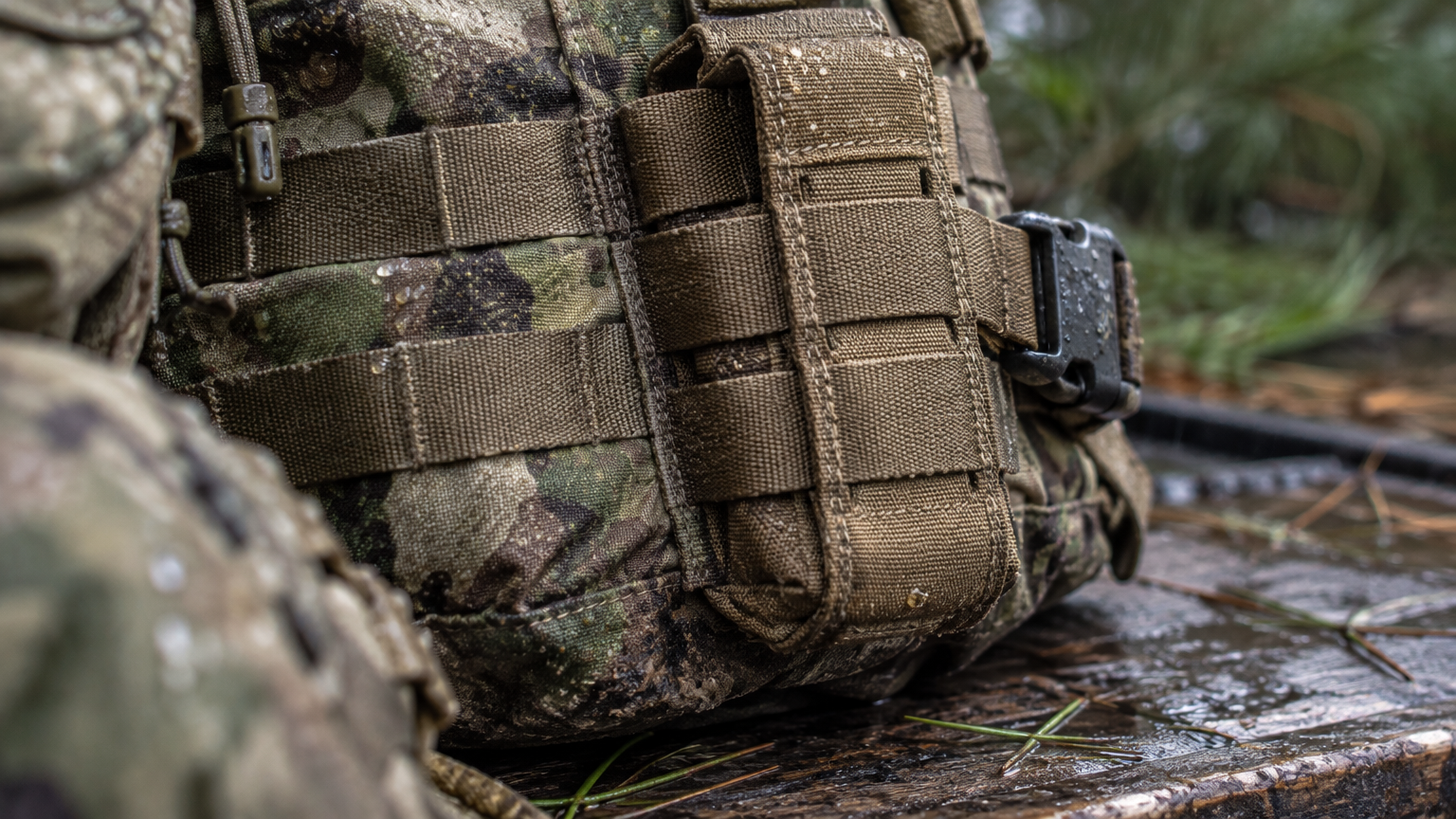
Modular Lightweight Load-carrying Equipment (MOLLE) relies on Pouch Attachment Ladder System (PALS) webbing stitched to the outside and sometimes the inside of a pack. Standard PALS webbing uses 1-inch-wide nylon strips sewn at 1.5-inch horizontal intervals, with 1 inch of vertical space between rows. That grid lets you attach first aid pouches, radio holders, bottle carriers, or tool sheaths exactly where your hands expect to find them.
Weaving a modular pouch properly prevents bouncing and sagging while you move. Pass the pouch's vertical strap through the top row of the pack's webbing, then back through the corresponding loop on the back of the pouch, alternating pack and pouch all the way down before snapping or tucking the end. Skipping a loop leaves slack that lets a heavy pouch slap against your hip with every stride.
External webbing adds versatility, yet hanging too many pouches on the front face pulls weight away from your spine. Heavy items belong inside the main compartment, pressed flat against the back panel between your shoulder blades. Keep external MOLLE attachments light and compact, such as an individual first aid kit (IFAK) or a tourniquet holder that you need to reach in two seconds without opening a zipper.
Inside the pack, structured organization keeps gear from pooling at the bottom. Look for internal mesh zip pockets for small hardware, hook-and-loop panels for modular organizers, and a dedicated hydration sleeve with a covered exit port at the top center or shoulder yoke. Routing a hydration tube through a dedicated port and clipping it to the shoulder strap keeps water accessible while keeping dust and rain out of the main compartment.
Materials, Stitching, and Hardware Durability
Fabric weight is measured in denier (D), which tracks the mass of a 9,000-meter strand of yarn in grams. For tactical backpacks, 500D to 1000D nylon or heavy-duty polyester provides the abrasion resistance needed around concrete, brush, truck beds, and range benches. A 1000D shell shrugs off scrapes against rock and rough lumber, while 500D nylon cuts overall pack weight by roughly 20 percent while still resisting tears.
Check the underside of the fabric for a polyurethane (PU) or thermoplastic polyurethane (TPU) coating. This interior backing blocks moisture from soaking through the weave during wet weather. Seams on tactical packs are rarely taped waterproof like dry bags, so a rain cover or internal dry sack still helps in a downpour, yet a coated exterior sheds road spray and brief showers.
Stitching fails long before heavy nylon tears. Inspect the points where the shoulder straps meet the top yoke, where the grab handle anchors to the shell, and where compression straps attach to the sides. Dependable packs use bar-tack stitching, a dense zigzag pattern, or box-X stitching at every load-bearing junction. Single-line straight stitches pull out under sudden jerks when you haul a 35-pound bag out of a truck cab by one handle.
Hardware takes constant abuse from grit, cold temperatures, and gloved hands. Look for #8 or #10 self-healing coil zippers with paracord pulls that stay quiet and easy to grip in the dark. Side-release buckles and triglides made from acetal or high-impact nylon resist snapping in freezing weather, unlike brittle standard plastics.
Harness Comfort and Weight Distribution
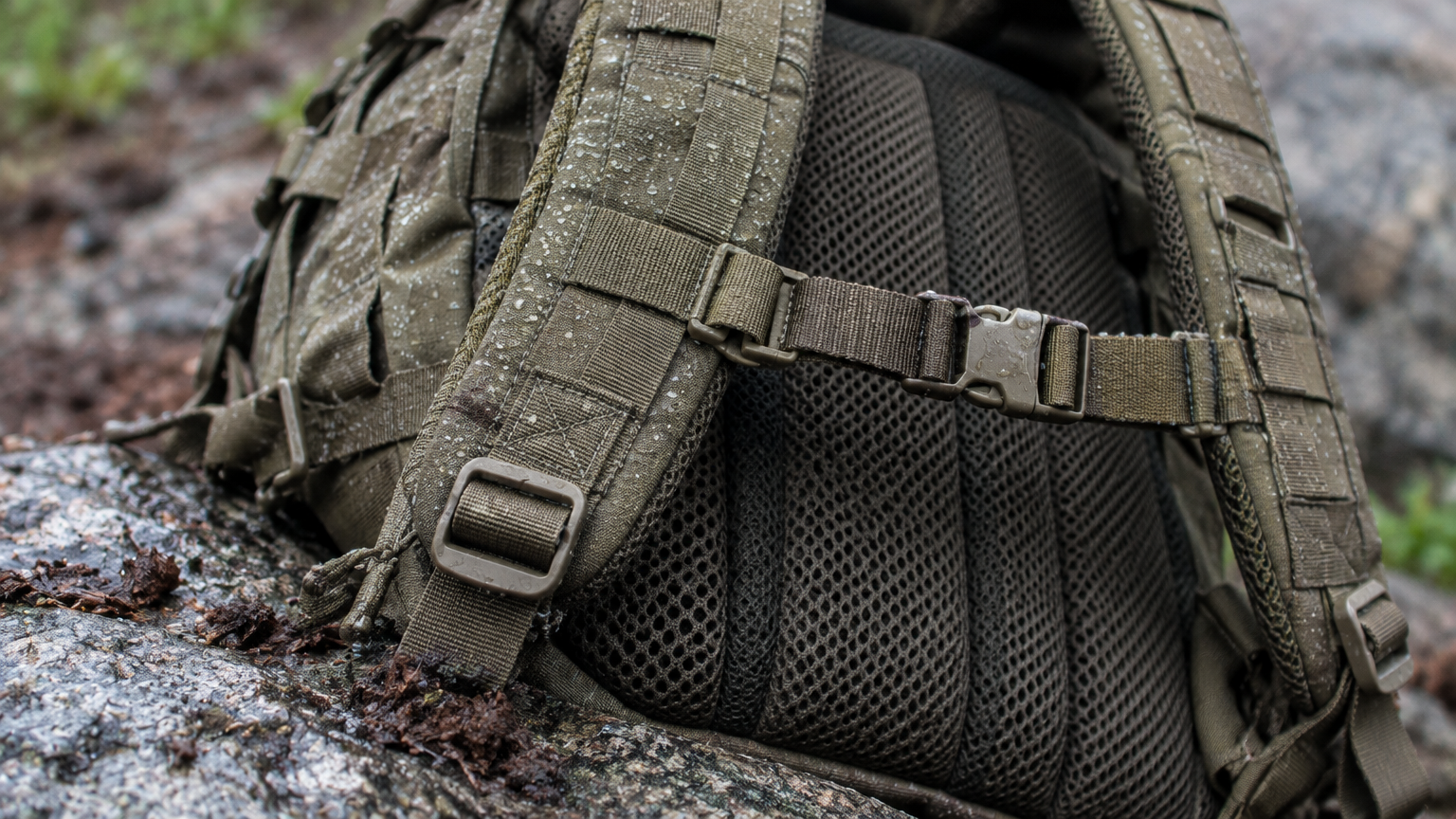
A pack's harness determines how long you can wear it before hot spots or shoulder numbness set in. Shoulder straps should measure 2.5 to 3 inches wide with closed-cell EVA foam padding that keeps its shape after months of compression. Straps contoured in a gentle S-curve wrap naturally around your chest and shoulders instead of digging into your collarbone.
Airflow across your back reduces sweat buildup during active movement. Raised foam channels covered in breathable spacer mesh create a gap between your shirt and the pack's back panel, allowing warm air to escape. A completely flat nylon back panel traps heat within ten minutes of brisk walking.
Adjustment straps let you tune the fit once the pack is loaded:
- Loosen the shoulder straps, load lifters, and sternum strap before putting the pack on.
- Buckle the waist belt first if the pack has one, centering it over the top of your hip bones.
- Pull the shoulder straps snug until the pack rests flush against your upper back without pinching your armpits.
- Connect the sternum strap across your mid-chest to stop the shoulder straps from sliding outward.
- Tug the top load-lifter straps gently toward your collarbones to bring the upper pack closer to your center of gravity.
Side compression straps on the outside of the pack perform an overlooked job. When your bag is only half full, cinching those straps flattens the profile and pins your gear against the back panel so nothing shifts when you bend, climb, or sprint.
Best Tactical Backpacks at a Glance
Comparing pack styles side by side clarifies which build standard fits your routine. Compact slings prioritize speed and minimal bulk, mid-size EDC packs balance office and range organization, and full-size field packs focus on frame support and multi-day volume.
| Pack Category | Typical Capacity | Best Use Case | Core Build Standard |
|---|---|---|---|
| Compact Tactical Sling | 8 to 14 liters | Daily errands, light tool carry, quick-access medical kit | Single padded cross-body strap, front PALS grid, quick-swing access |
| Mid-Size 24-Hour EDC | 20 to 30 liters | Work commute, range day, overnight travel | Dual contoured straps, clamshell main bay, padded laptop or hydration sleeve |
| Full-Size Field Backpack | 35 to 55 liters | Multi-day trips, heavy loadouts, backcountry work | Internal frame sheet, padded hip belt, full PALS wrap, #10 zippers |
Best Tactical Backpacks of 2025
Tactical backpack designs in 2025 centered on maximum modularity and multi-pocket compartmentalization. Makers emphasized full-wrap external PALS webbing, deep admin organizers with elastic tool loops, and thick 1000D shells built to withstand heavy abrasion. Packs from 2025 prioritized dedicated storage for every small item, pairing clamshell main bays with fleece-lined optics pockets and external compression straps that double as lash points for tripods or rolled jackets.
The Best Tactical Backpacks of 2026
Pack designs in 2026 refined weight savings and daily carry ergonomics without giving up tear strength. Newer weaves in the 500D-to-600D range shed unnecessary ounces while keeping bar-tacked stress points and heavy-duty #10 zippers intact. Laser-cut MOLLE slots replaced bulky stitched webbing rows on many 2026 models, creating cleaner, lower-profile silhouettes that transition from a job site to an airport terminal while improving back-panel ventilation.
Frequently Asked Questions
What should I look for when buying a tactical backpack?
Focus on six factors: a liter capacity that fits your actual gear, 500D to 1000D abrasion-resistant fabric with a water-resistant coating, bar-tacked stitching at strap anchors, #8 or #10 coil zippers with polymer buckles, standardized PALS webbing for modular pouches, and a padded harness with a sternum strap.
How big of a tactical backpack do I need for everyday carry?
A 20-to-30-liter backpack fits most everyday carry needs, including a laptop, water bottle, medical kit, rain shell, and daily tools. If you carry only compact essentials under 10 pounds, an 8-to-14-liter sling bag keeps bulk to a minimum.
What is the difference between 500D and 1000D fabric?
Both offer strong tear resistance, yet 1000D fabric provides heavier abrasion protection for rough field use, while 500D fabric cuts pack weight by roughly 20 percent and drapes more comfortably for daily carry.
Do I need a waist belt on a tactical backpack?
Packs under 25 liters and loads under 15 pounds carry comfortably on padded shoulder straps and a sternum strap alone. Once your loadout reaches 25 pounds or your pack exceeds 35 liters, a padded waist belt moves most of the weight onto your hips and saves your lower back.
Choosing the Appropriate Pack for Your Kit
Selecting the correct pack for the task keeps equipment sorted while reducing shoulder strain throughout the day. A compact cross-body option works well for everyday tools, travel items, or trail supplies weighing under 10 pounds. When carrying multi-day supplies, heavier tools, and requiring dual-shoulder support, a standard pack provides the needed capacity.
If a sling bag fits your setup, explore our MOLLE Tactical Sling Bag. For a field-pack option, see the MOLLE Field Backpack. Compare each product's details with the capacity, fit, and organization criteria above.
At Crane's Keep, we supply outdoor gear, tools, and tactical equipment for men who work, train, fix things, and prepare. Contact us.